
Kawthoolei · Community Livelihoods
A Sweeter Future for Kawthoolei
How Indigenous Karen communities are turning forest honey into income — while strengthening the connection between livelihoods and conservation.
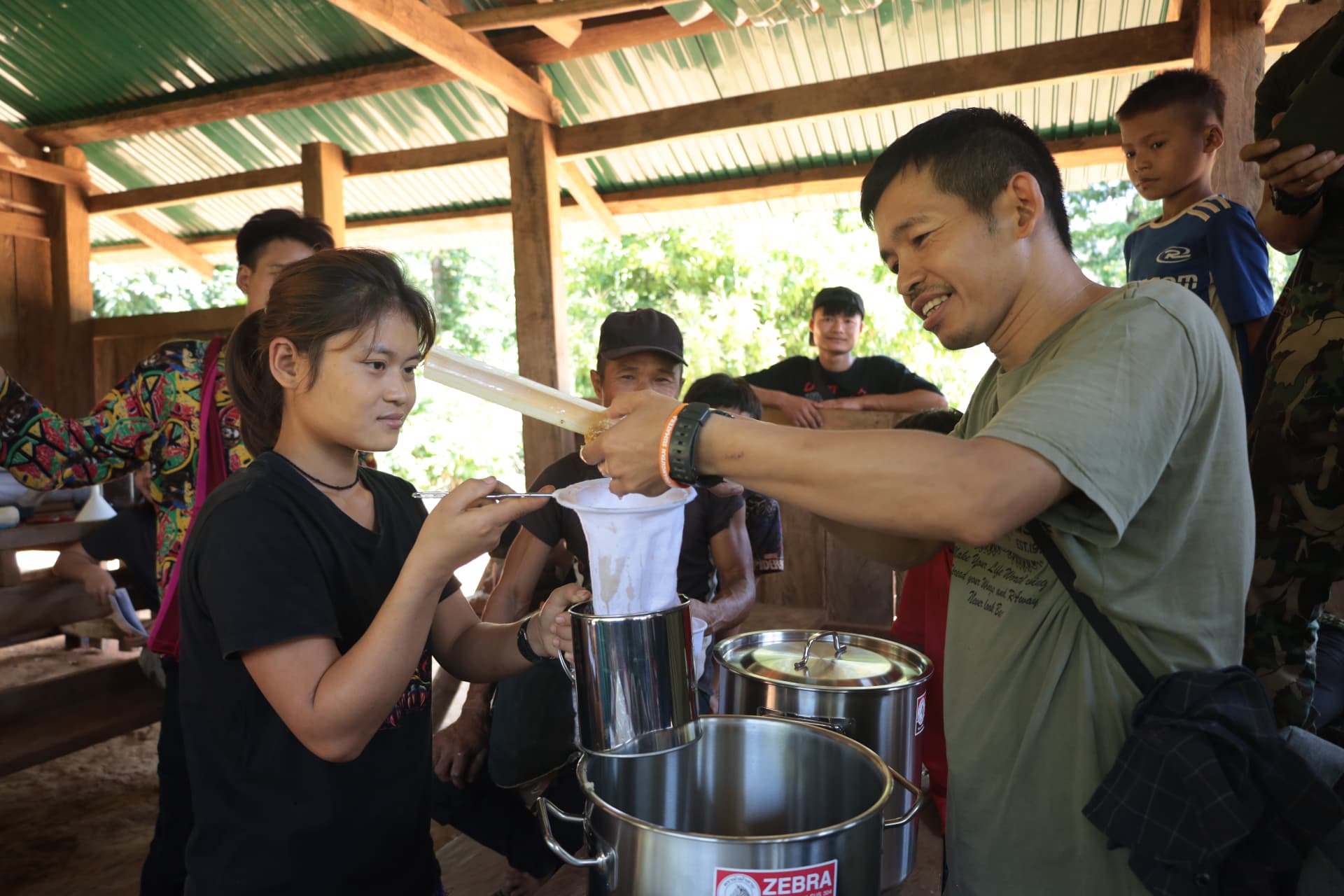
In the forests around Kaydoh Maenyaw Wildlife Sanctuary in Kawthoolei, communities are finding new ways to sustain their livelihoods in extraordinarily difficult circumstances.
Since 2021, renewed conflict in parts of Mutraw District has brought continued insecurity, displacement and disruption to farming. For Indigenous Karen communities whose lives have long been closely connected to the surrounding forests, finding reliable sources of income has become increasingly difficult.
One promising response is coming from something deeply connected to the forest itself: honey.
For generations, communities in the area have relied on forests for food, medicine and other non-timber forest products. Honey production builds on that relationship, creating an opportunity to generate income while maintaining the healthy forests and flowering plants on which bees depend.
With support through local conservation initiatives, community members have been developing the skills needed to take honey production beyond harvesting alone.
Training has included constructing beehives and identifying suitable locations in the forest where bees are likely to establish colonies. Communities are also learning to process and package honey themselves, allowing more of the value of the finished product to remain locally.
The initiative has expanded into honey soap production, creating another product that can be made and sold by communities. Honey soaps are now being produced both around Kaydoh Maenyaw Wildlife Sanctuary and in communities along the Salween River, with products distributed and sold across the Salween Peace Park.
So far, two honey-production trainings and two soap-making trainings have been held. Around 30,000 Thai baht in profit has been generated from honey and soap sales, with 100% of those profits returning to the communities involved in production and processing.
There are encouraging signs for the future too. Bees have already begun establishing colonies in some of the hives constructed during the training. As more hives become occupied, communities hope to increase the amount of honey they can collect, process and sell.
Honey production cannot overcome the enormous economic challenges created by conflict. But it offers a practical example of how conservation and livelihoods can reinforce one another.
When communities can earn income from healthy forests, protecting those forests also helps protect the resources on which their livelihoods depend.
The next step is to strengthen coordination around honey collection, processing and product quality, helping build a more reliable source of income over time.
It is a modest initiative with a much larger idea at its heart: resilient communities and resilient forests depend on one another.