
West Java, Indonesia
Javan Gibbon Conservation
More than two decades helping rescued Javan gibbons return to the forests of West Java — while building the local expertise and partnerships needed to secure their future in the wild.
Why this landscape matters
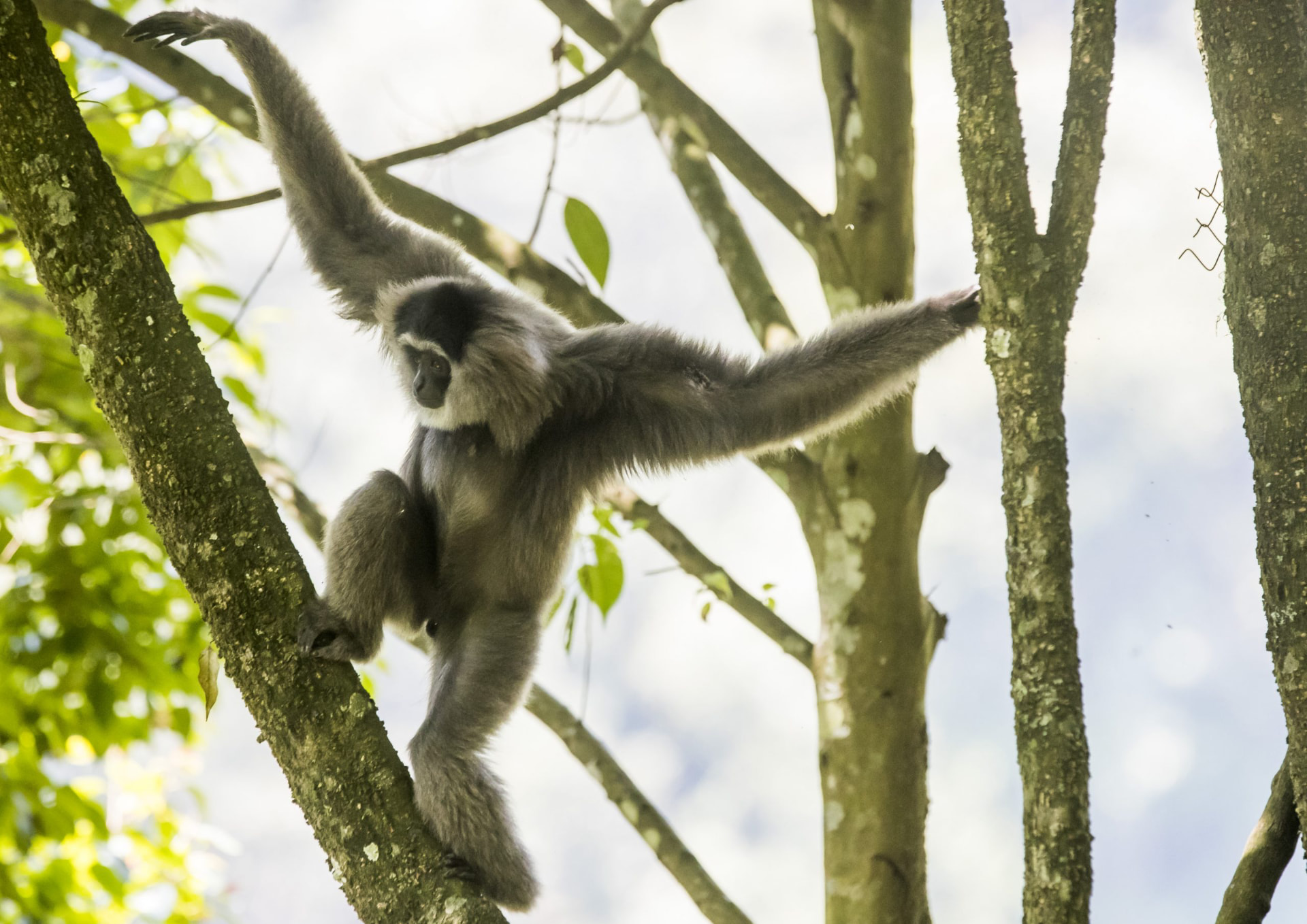
The Javan gibbon is found only on the island of Java. Remaining populations occur inside and outside protected areas, in fragmented forest in western Java, where habitat loss, isolation and the illegal wildlife trade continue to threaten the species.
These forests support far more than gibbons. They protect watersheds, store carbon and provide habitat for an exceptional diversity of wildlife, while supporting communities living around their boundaries. But centuries of forest loss and fragmentation have left many wildlife populations isolated, increasing the importance of protecting and reconnecting the habitat that remains.
Javan gibbons are also still taken from the wild for the illegal pet trade. Protecting the species means both keeping wild populations secure and giving rescued gibbons a genuine path back to the forest — work led in Indonesia and supported by Wildlife Asia over the long term.
- Key wildlife
- Javan gibbon · Javan leopard · Javan slow loris
- Focus
- Rescue, rehabilitation, reintroduction and protection of wild populations
- Communities
- Communities surrounding West Java's remaining forests play an essential role in their long-term protection.
- Conservation significance
- The only wild home of the Endangered Javan gibbon, a species found nowhere else on Earth.
From rescue to return
Returning a rescued gibbon to the wild is a long and carefully managed journey.
- 01
Rescue
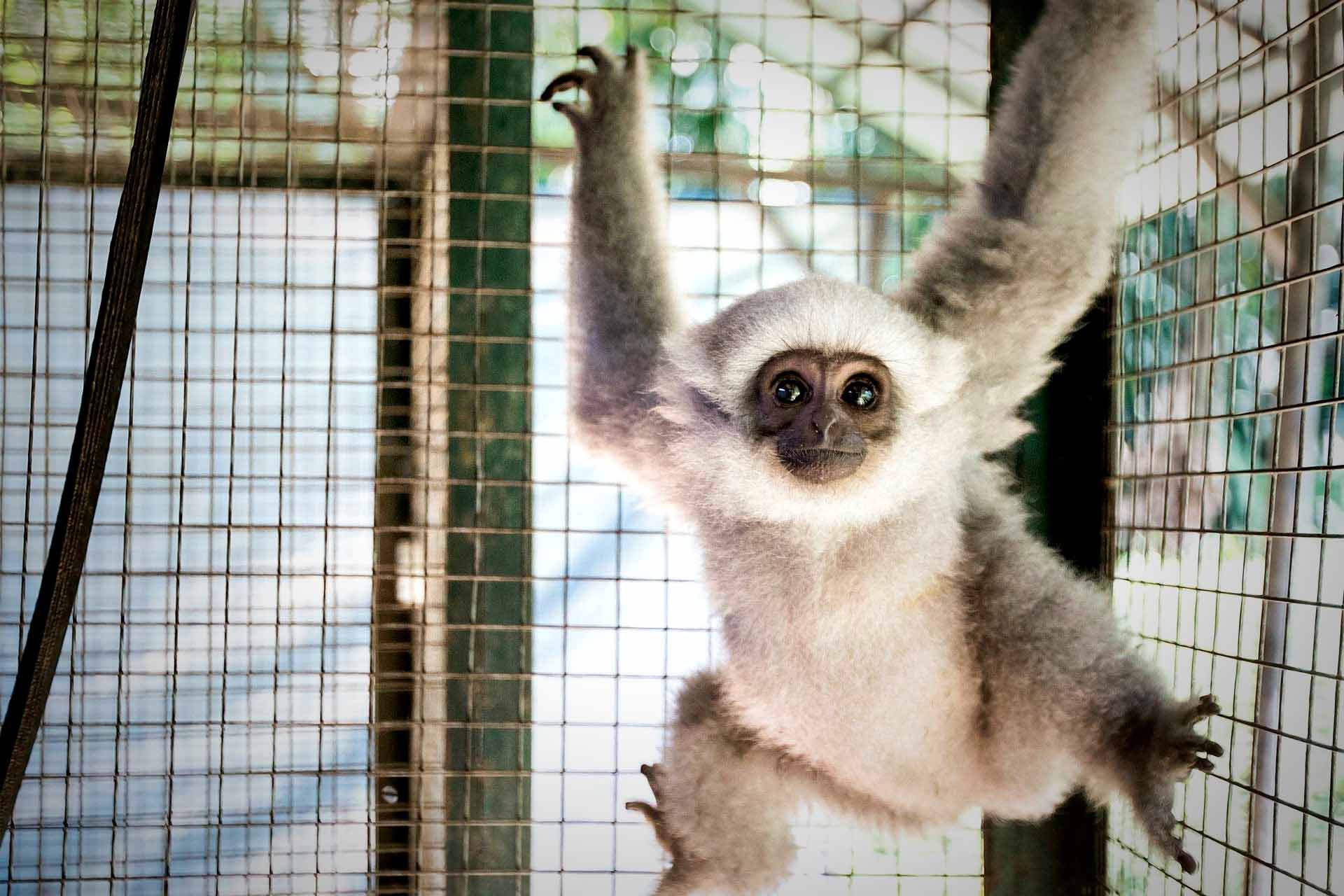
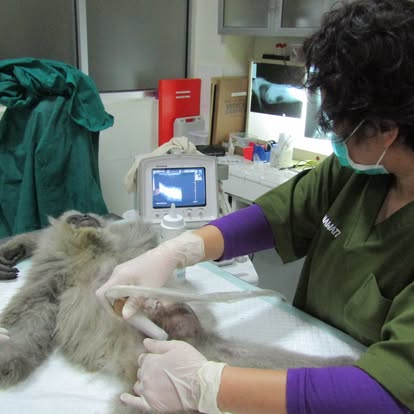
Javan gibbons confiscated by authorities or relinquished from human captivity arrive with different histories and needs. Each begins with veterinary assessment and individual care.
- 02
Rehabilitation
At the Javan Gibbon Centre, experienced caregivers and veterinary staff support physical recovery while encouraging the natural behaviours essential for life in the forest.
- 03
Pairing
Gibbons are highly social animals. Compatible individuals are carefully introduced and given time to establish the strong pair bonds important to their future in the wild.
- 04
Pre-release
Gibbons ready for reintroduction move to pre-release facilities where their health, behaviour and suitability for return to the forest can be assessed.
- 05
Return to the wild
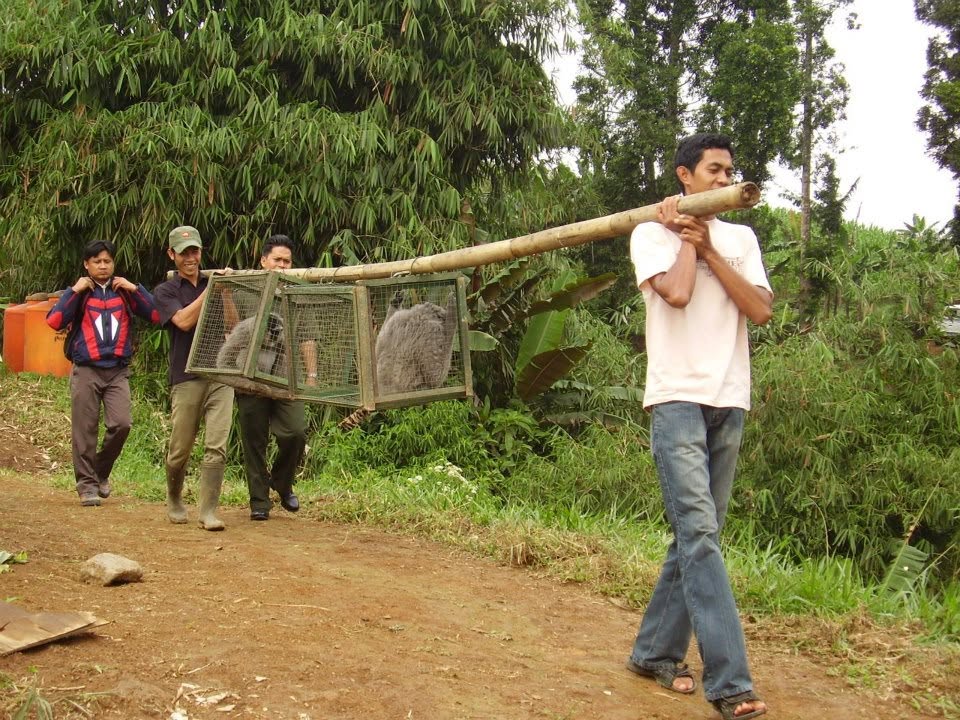
Suitable pairs and family groups are released into protected forest at Mt Puntang in the Mt Malabar landscape, where the reintroduction program has operated since 2013.
- 06
Post-release monitoring
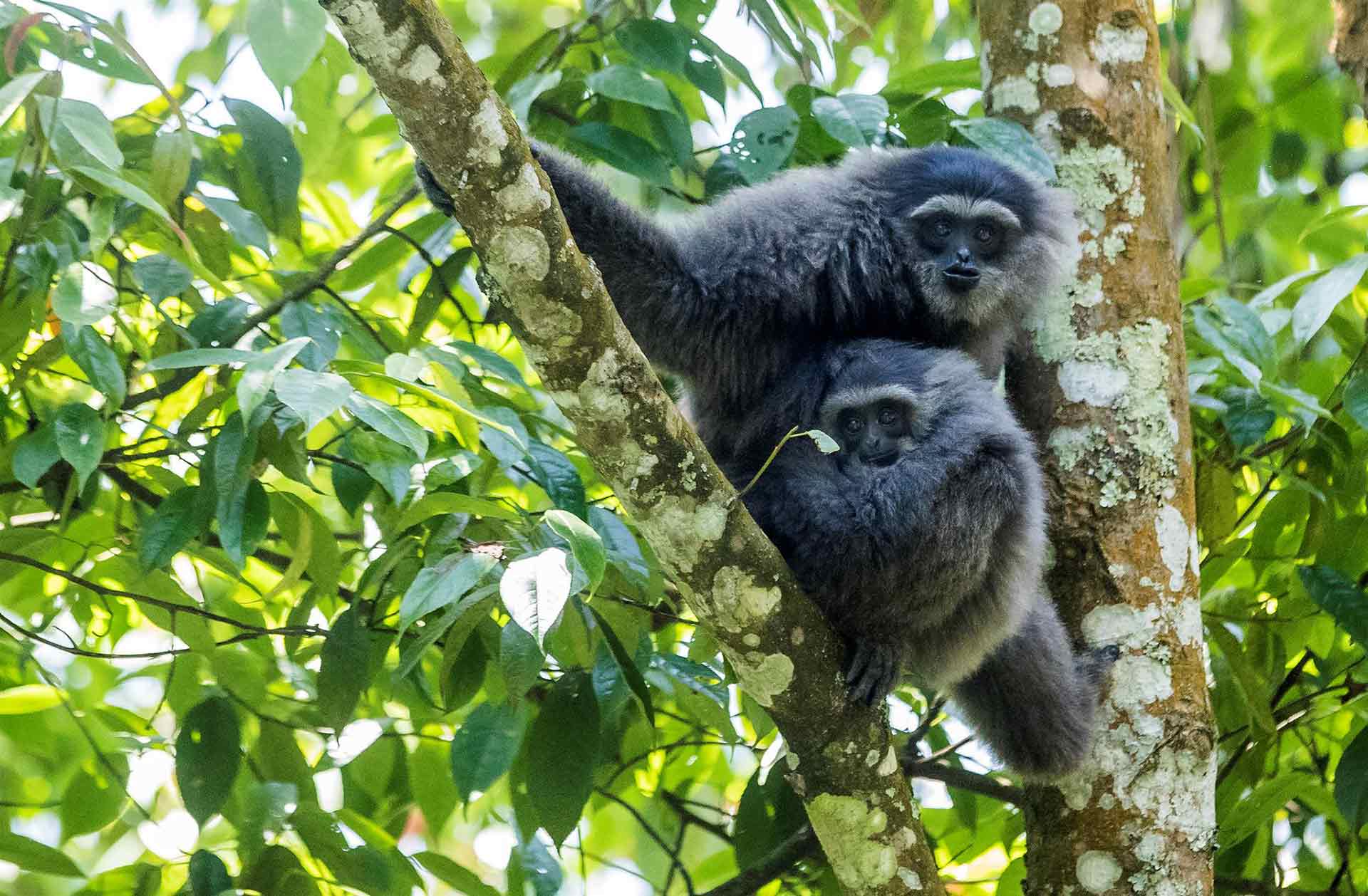
Release is not the end of the process. Dedicated monitoring teams follow reintroduced gibbons for at least a year — and for as long as they can be observed — recording behaviour, adaptation and survival in the wild.
Conservation challenges
01
Habitat loss and fragmentation
Java's remaining forests are under intense pressure. Protecting and restoring suitable habitat is essential not only for released gibbons, but for the long-term survival and connectivity of wild populations.
02
Illegal wildlife trade
Javan gibbons continue to be taken from the wild for the illegal pet trade. Rescue and rehabilitation therefore need to be accompanied by education, awareness and broader efforts to reduce demand and prevent further extraction from wild populations.
03
Securing populations for the long term
Successful reintroduction is measured not simply by release, but by whether gibbons survive, establish territories, maintain social groups and ultimately reproduce. Long-term monitoring, habitat protection and strong local conservation capacity are critical.
Twenty-seven years alongside one species
Long-term partnership is measured in decades, not project cycles — and in who is left leading the work at the end of them.
- 1999
The Silvery Gibbon Project is established — one of the organisations from which Wildlife Asia evolved.
- 2003
Support helps establish the Javan Gibbon Centre, Indonesia's first dedicated rehabilitation facility for the species.
- 2013
The reintroduction program begins, returning rehabilitated gibbons to protected forest at Mt Puntang.
- 2026
Management of the Javan Gibbon Centre moves toward Gunung Gede Pangrango National Park, with the Javan Gibbon Foundation focused on gibbons in the wild.
A conservation program built to last
Success means becoming less necessary.
The current program is strengthening collaboration between the Javan Gibbon Foundation and Gunung Gede Pangrango National Park, the Indonesian Ministry of Forestry, including technical guidance, training and greater government involvement in JGC operations. The aim is to support a durable local and government-led conservation model with stronger capacity and more sustainable funding.
The Javan Gibbon Foundation and government partners now have highly experienced teams working across rehabilitation, reintroduction, monitoring, habitat protection and conservation education. Our support has shifted toward stronger Indonesian management, sustainable funding and direct relationships between local conservation organisations and international donors.
Management and leadership are becoming increasingly local — which is exactly what a strong long-term partnership should produce.
Javan Gibbon Foundation
Key long-term partner
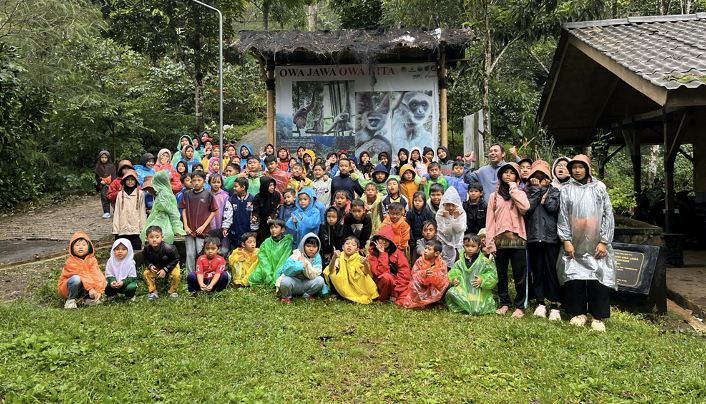
An Indonesian conservation organisation leading Javan gibbon rehabilitation, reintroduction, monitoring, research, education and protection.
Meet our partner →What long-term support makes possible
42
Javan gibbons returned to the wild
Released into the Mt Malabar protected forest since the reintroduction program began in 2013.
6
births observed
Evidence that reintroduced gibbons are not only surviving in the wild, but forming families.
9
reintroduction events
Building knowledge and experience in returning rehabilitated Javan gibbons to protected forest.
5,577
Students reached
Conservation education delivered in schools and communities during 2025–26, building awareness and helping address the illegal wildlife trade.
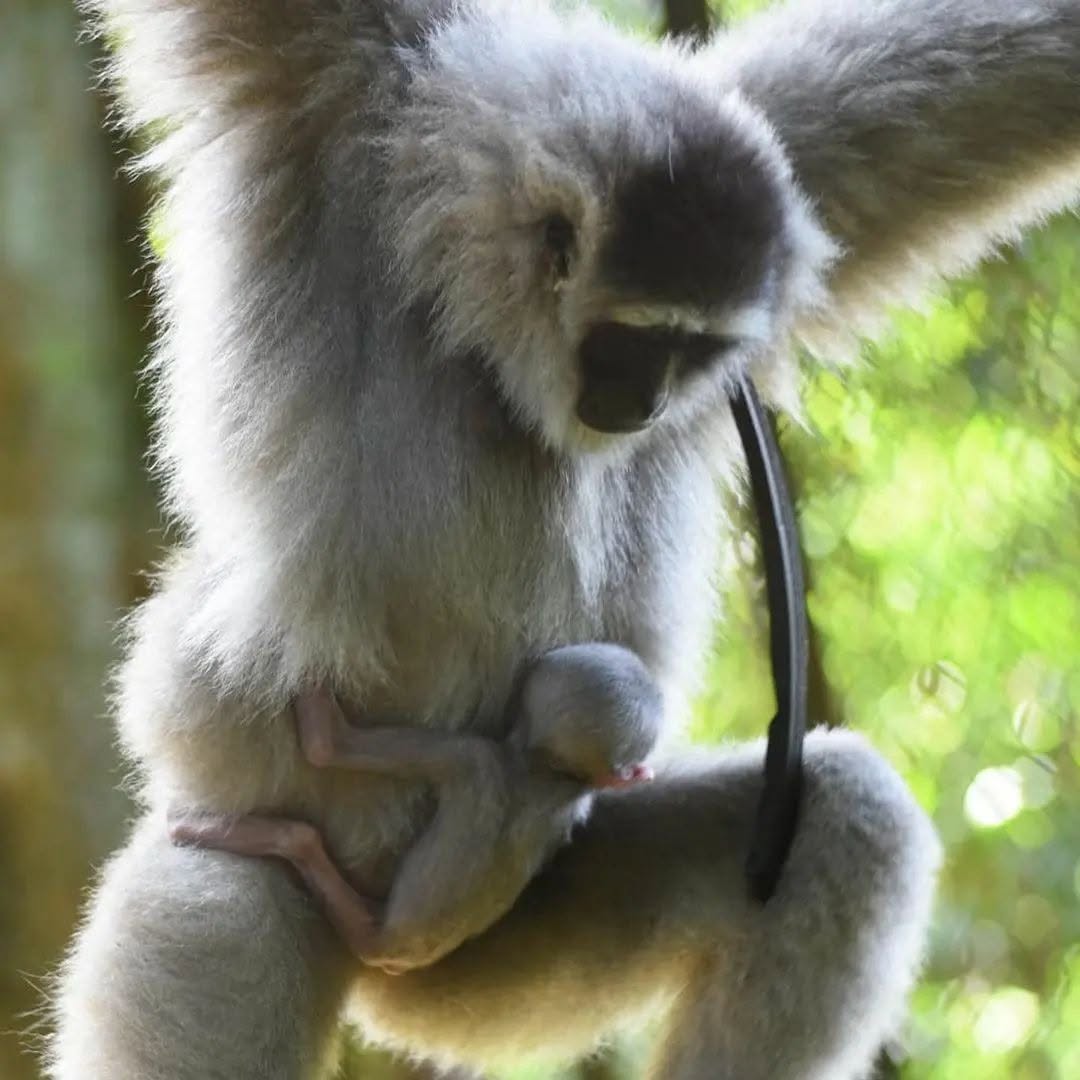
A reintroduced female carries her infant — evidence that gibbons returned to the forest are surviving, pairing and raising young in the wild.
The next chapter
The ultimate goal is not simply to rehabilitate more gibbons. It is to create a future in which fewer gibbons need rescuing at all.
In 2026, the program is preparing for an important transition. Plans include the handover of the Javan Gibbon Centre to Gunung Gede Pangrango National Park and a future focus on in-situ conservation, including population surveys, protection of wild populations and their habitats, post-release monitoring and patrols, education and awareness, species monitoring and habitat restoration at Mt Puntang.
Three priorities for the next phase
Know
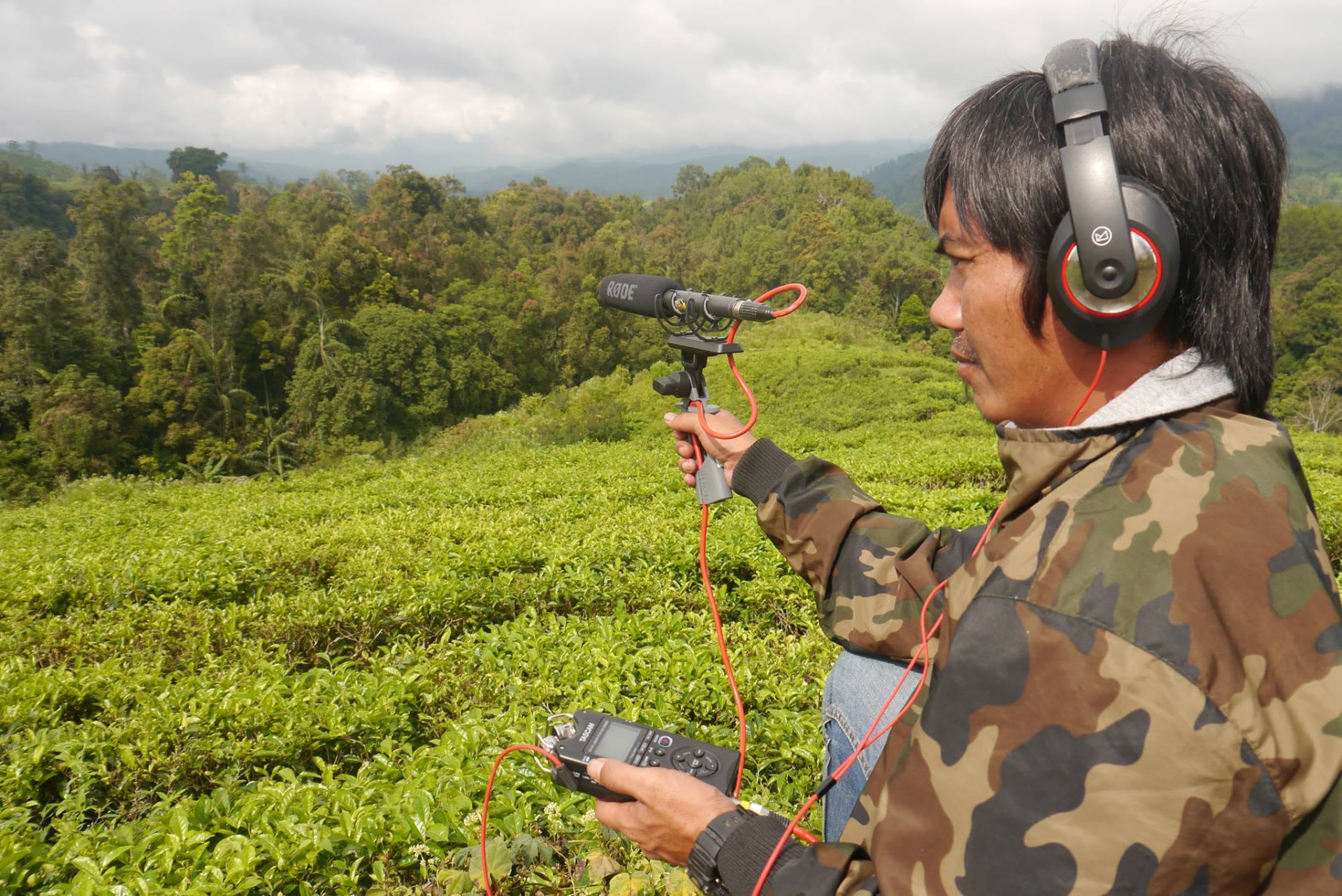
Better understanding wild populations through surveys, research and monitoring.
Protect
Patrolling habitat, monitoring released gibbons and restoring degraded forest.
Prevent
Education and awareness aimed at reducing illegal trade and keeping gibbons in the wild.
Help secure a future for the Javan gibbon.
Support long-term, locally led conservation that helps return rescued gibbons to the wild — and protects the forests and populations that will determine the species' future.